
2026
BlendScope
BlendScope is an original concept I conceived and built: a security investigation platform designed as the intelligence layer above the existing security stack, turning raw signals from multiple tools into a unified, investigable picture of system behavior.
The core insight is that security is a graph problem, not a log problem. BlendScope gives experienced analysts multiple perspectives, or Scopes, through which to reason about what actually happened.
Challenge
The Problem
Most SIEMs are optimized around ingestion, query speed, and alert volume. BlendScope is optimized around investigation cognition.
- Attackers pivot across identity, endpoint, network, and cloud in ways no single tool sees
- Rule-driven tools surface alerts but rarely explain system behavior
- Investigation context is often lost between shifts, tickets, and browser tabs
- Experienced analysts need lenses for reasoning, not another stream of conclusions
Objectives
Project Goals
- Model the environment as entities, relationships, and events
- Design Scopes that rearrange the same signals into useful investigative perspectives
- Reduce cognitive load through signal-first defaults and progressive relationship reveal
- Create a persistent canvas where investigation knowledge compounds over time
Screens
Product Screens
Go Deeper
Screen Deep Dives
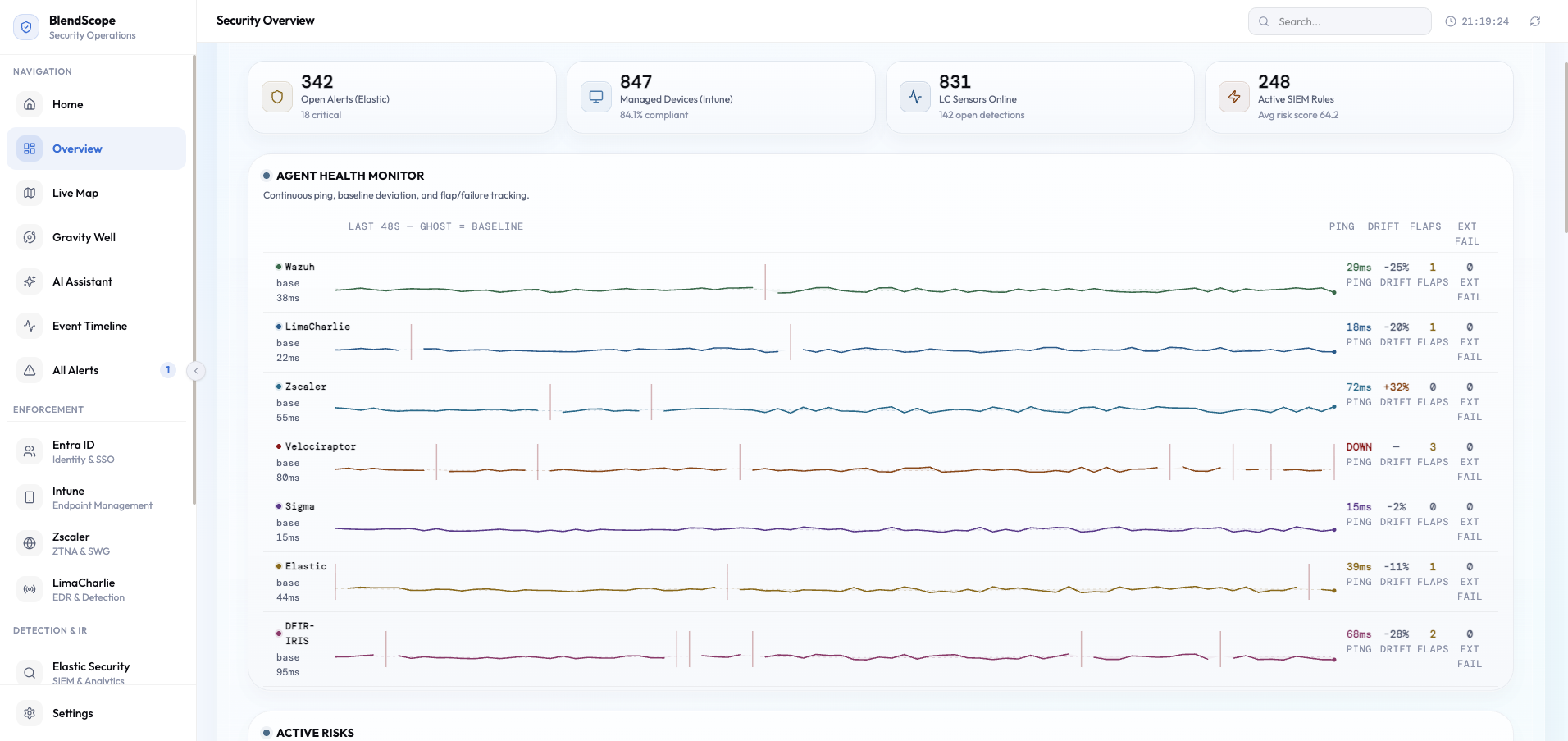
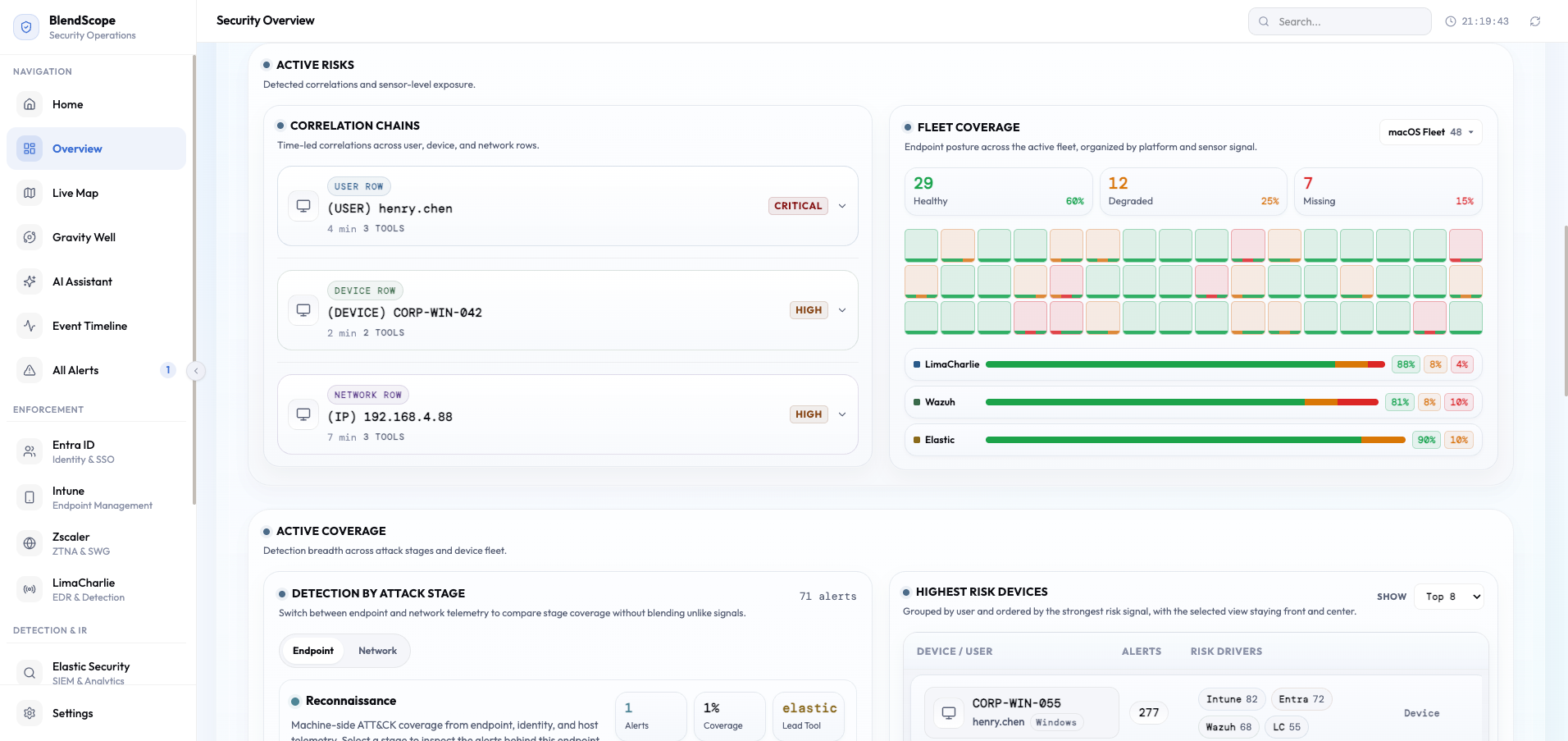
Overview: Command Center
Ambient awareness over dashboards: a security command center you can read in two seconds.
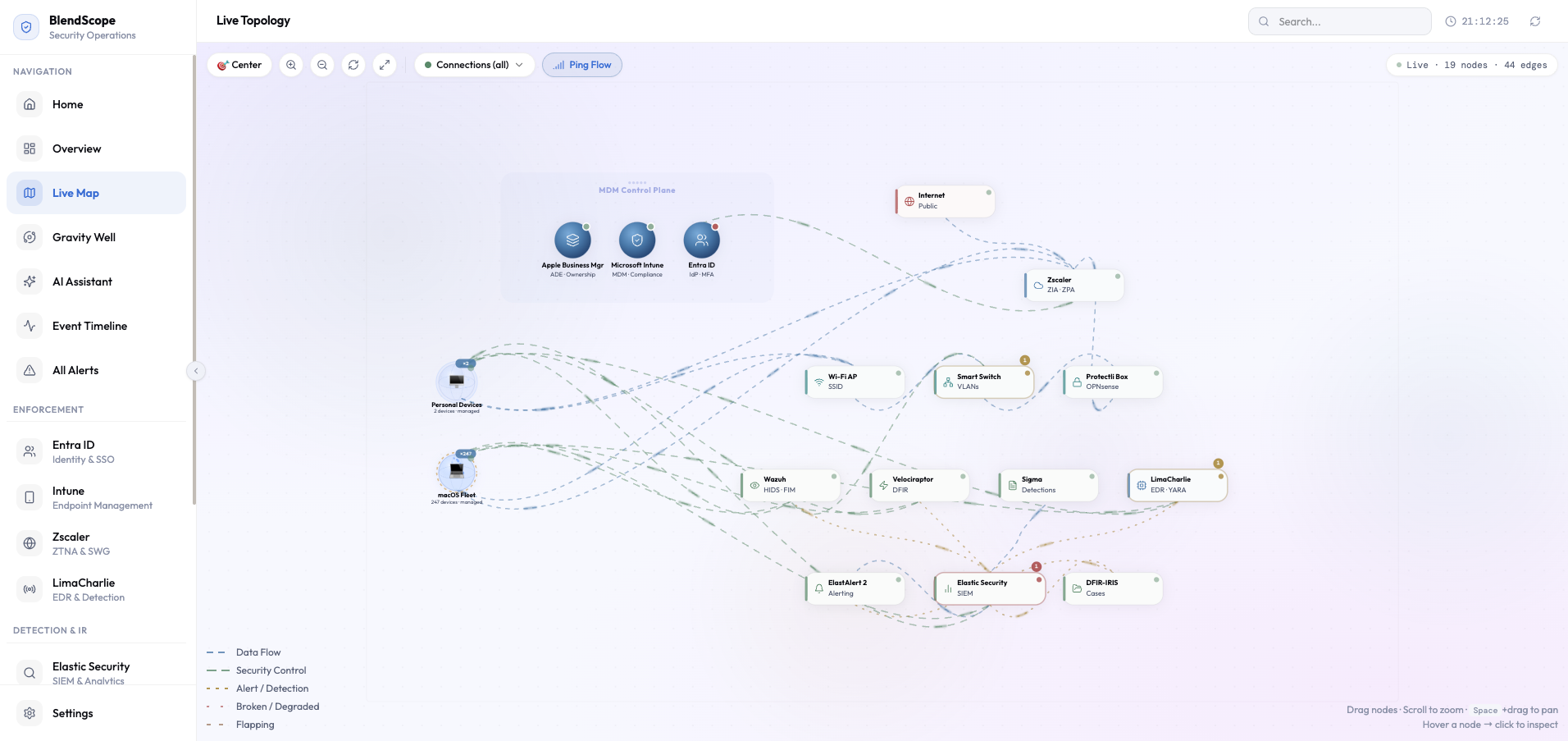
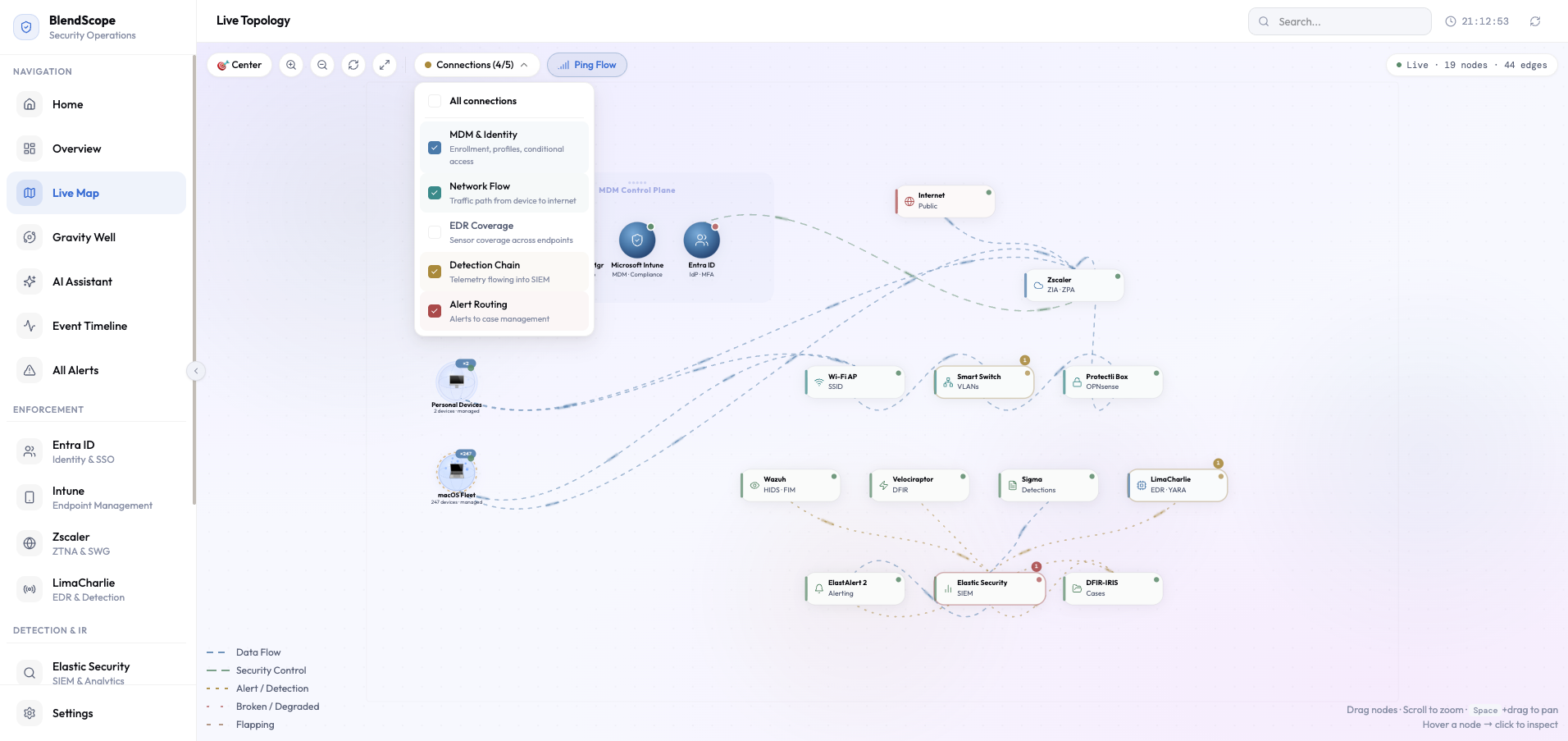
View Deep Dive →Live Map: Security is a Graph Problem
Lateral movement is a graph traversal problem. This is the map that makes it visible.
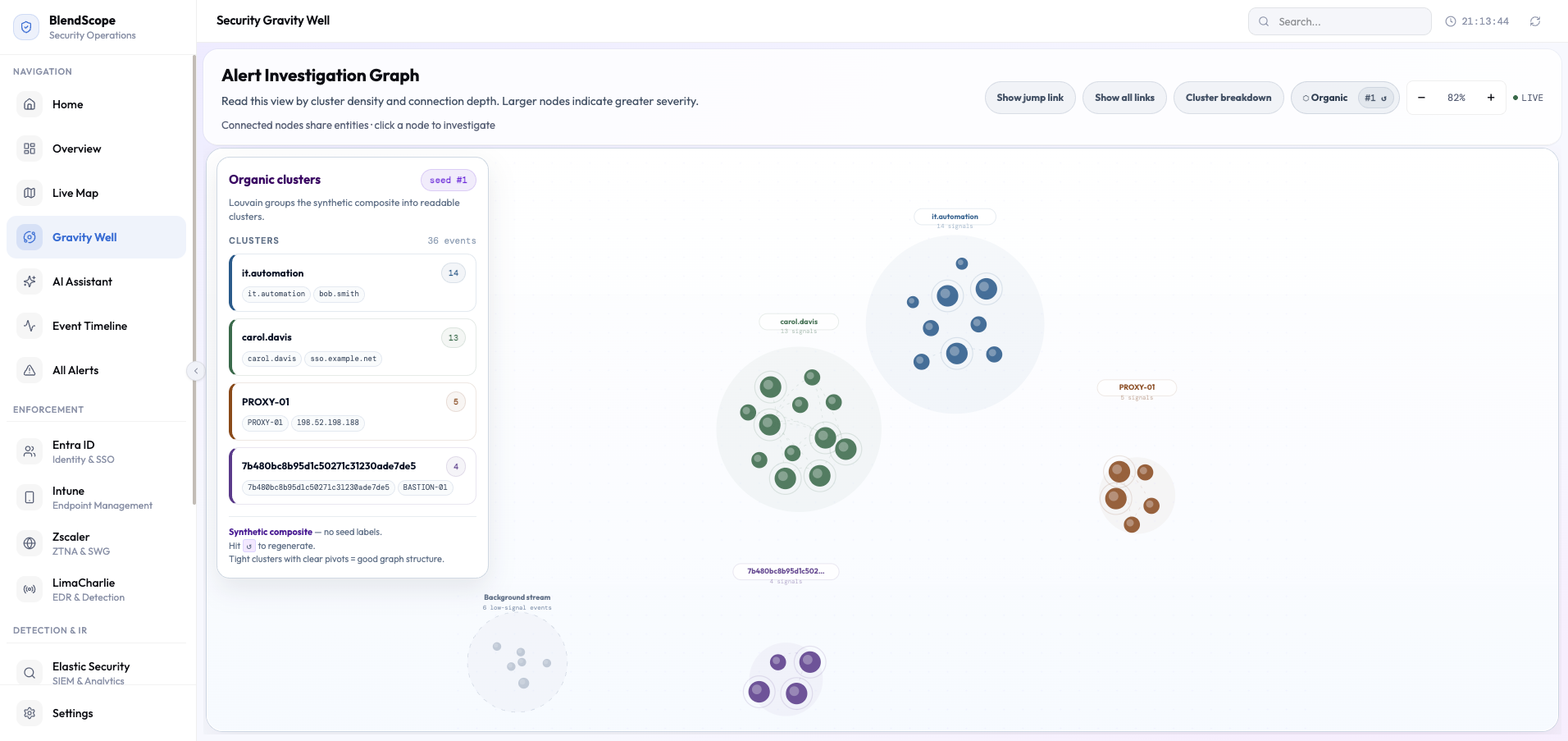
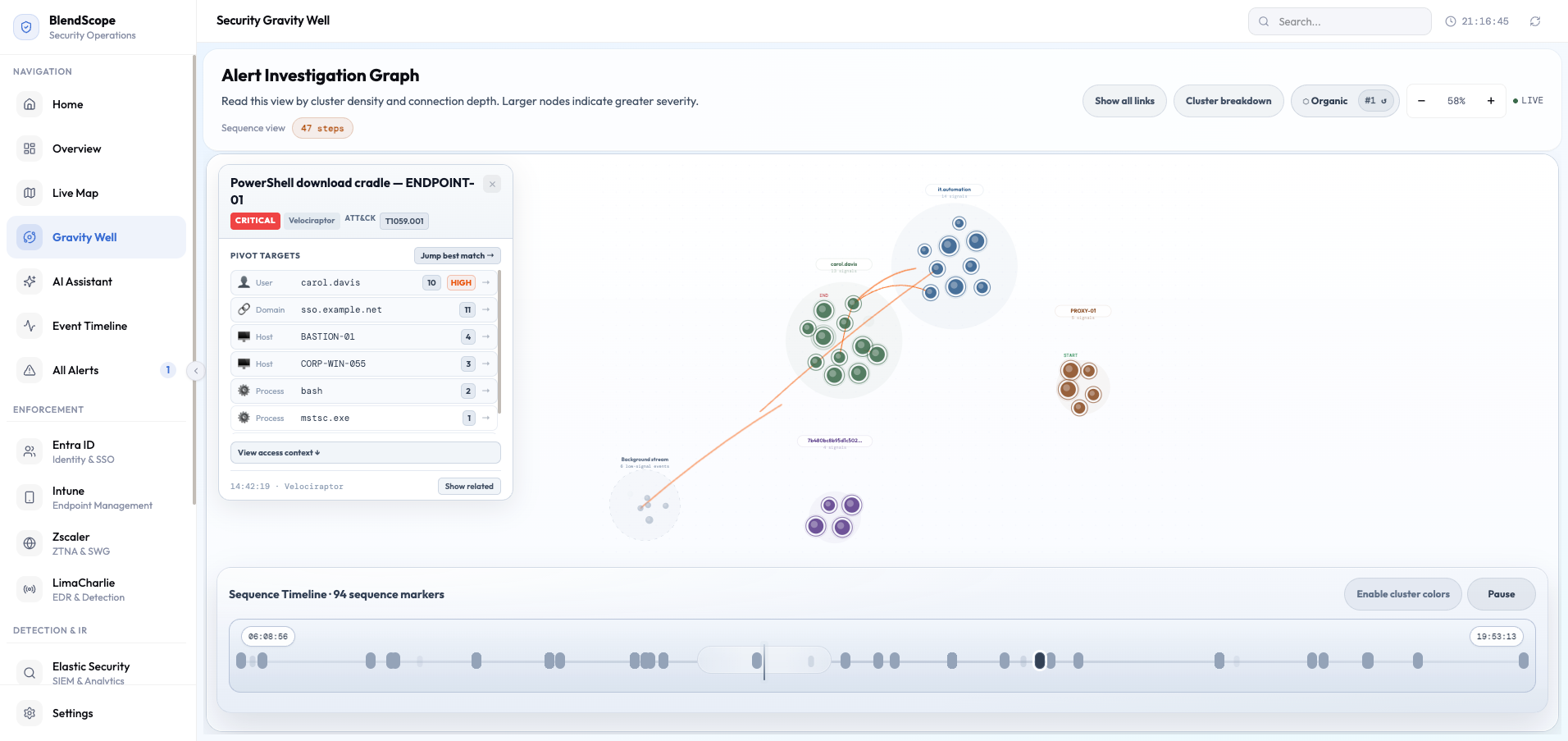
View Deep Dive →Gravity Well: The Campaign Map
Campaign structure rendered as a solar system, not a table you have to search.
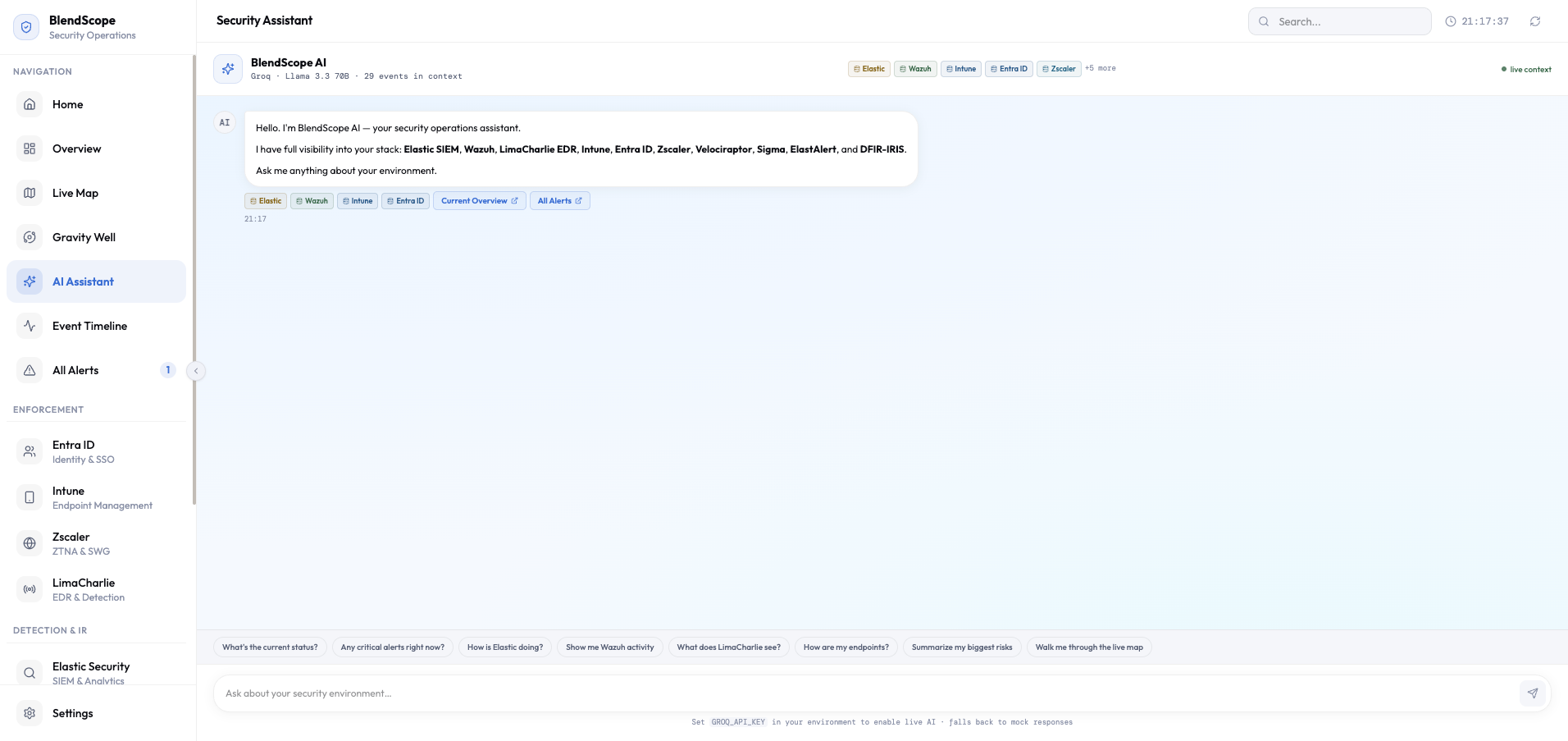
View Deep Dive →AI Assistant: A Colleague, Not a Query Box
Built for investigation reasoning, not query acceleration.
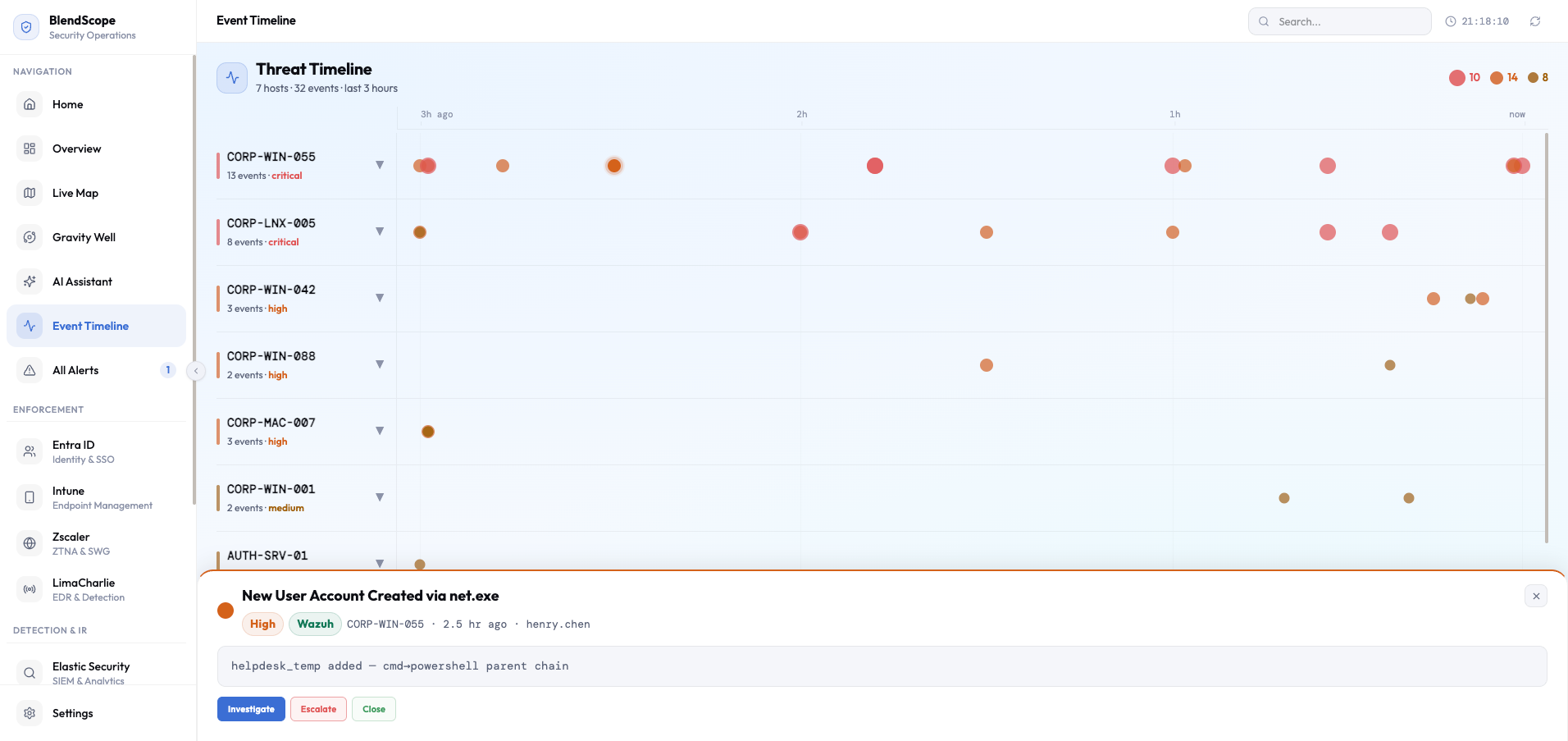
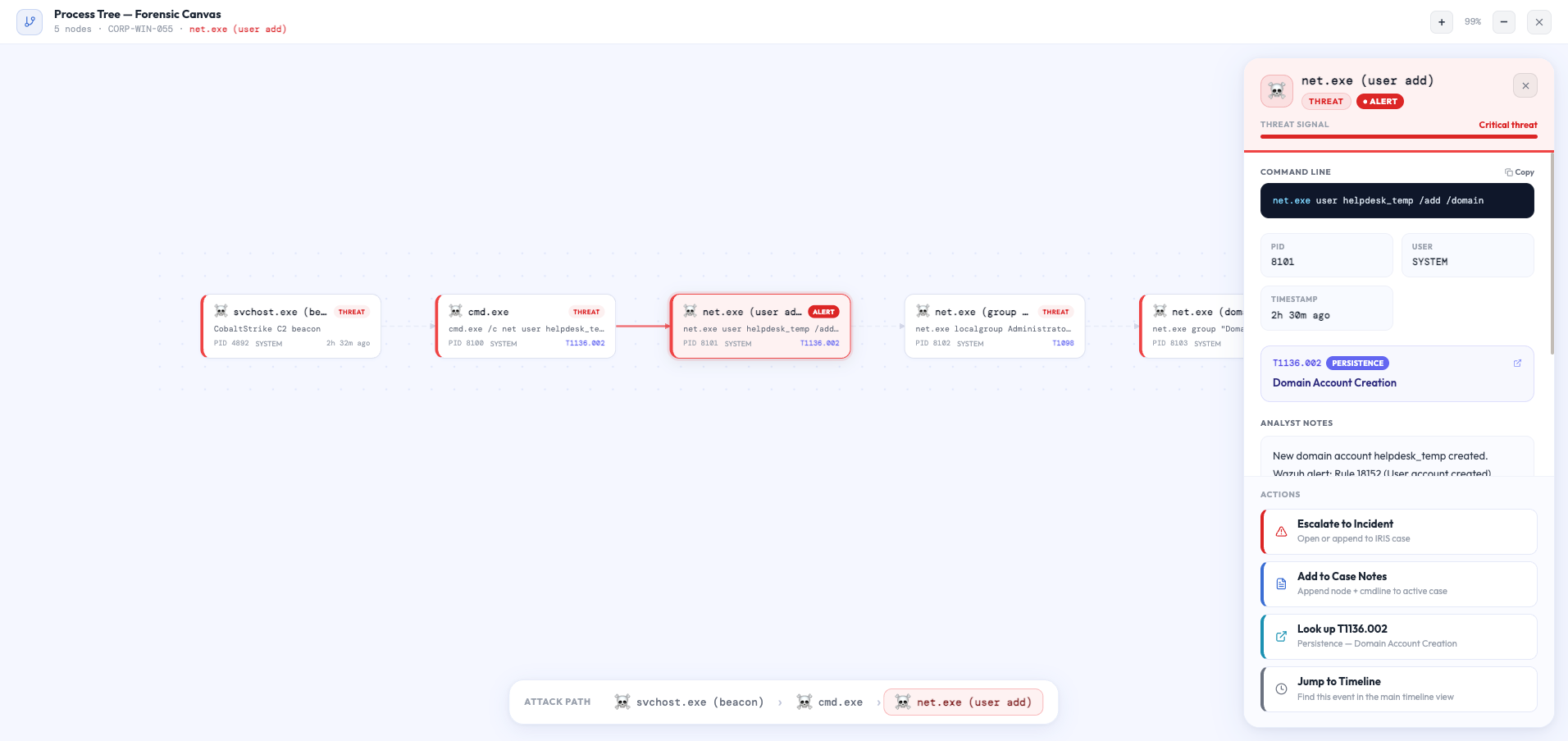
View Deep Dive →Timeline & Forensic Canvas: Triage, Then Investigate
Two phases of one investigation: what happened, then why.
View Deep Dive →All Alerts: The Foundation, Not the Destination
The normalization layer that makes cross-tool triage possible.
View Deep Dive →Approach
Design Process
-
01 Positioning
- Defined BlendScope as the OS above Elastic, Wazuh, LimaCharlie, and Sigma rather than a replacement for them
- Framed the competitive gap against dashboard-first SIEM workflows
-
02 Investigation Lenses
- Designed core views around cognitive jobs: Home Feed, Gravity Well, Forensic Canvas, Timeline, Live Map, AI Assistant, tool pages, and All Alerts
- Kept the philosophy explicit: signals to perspectives to human reasoning
-
03 Gravity Well
- Specified sequence mode, jump link explorer, organic clustering, outward link flow, and story mode
- Used one-relationship-at-a-time reveal to prevent complex graph views from becoming noise
-
04 Architecture
- Established an Express proxy pattern so API credentials stay server-side
- Normalized connected tool data into BlendScope's visual language while preserving tool-specific operational context
Results